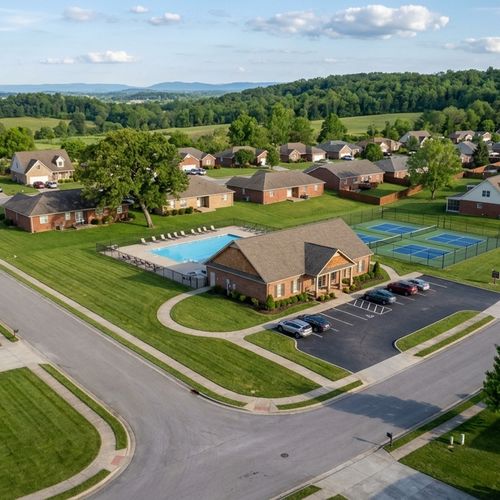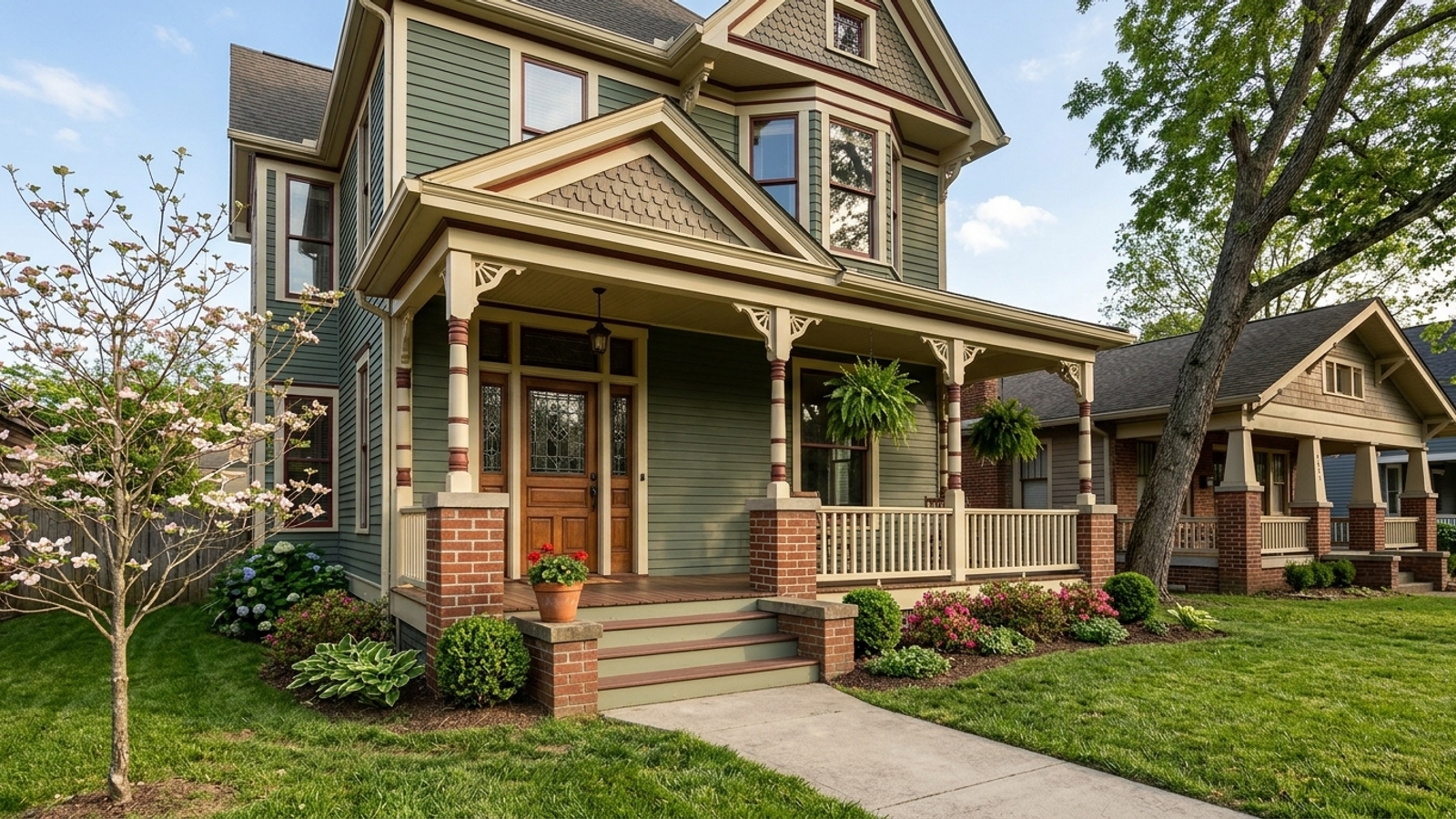
Knoxville's history is still the best guide to what you can buy there today. The city's growth eras built distinct neighborhoods of detached houses, and reading the area's past is the quickest way to read its modern housing map.
The railroad, the Tennessee Valley Authority, and the 1982 World's Fair each left a different kind of street behind. That's why certain blocks have Victorian architecture and others are lined with mid-century ranches. What follows is that timeline, what it means for your real estate options, and what you'll want to know before buying an older property.
Key Takeaway
Knoxville began as James White's Fort in 1786, served as Tennessee's first capital, and grew on the railroad, the Tennessee Valley Authority, and the 1982 World's Fair. If you want to live inside that history, start with Old North Knoxville's older restored houses near downtown. If you'd rather have a mid-century home on a larger wooded lot, Holston Hills is the alternative.
Who This Guide Is For
You're moving to or buying in Knoxville and want to understand how the city's past shaped the neighborhoods and older homes you'll be choosing between.
Knoxville History in Brief
Knoxville's growth eras built a city of detached houses, and that reality still dictates what sells. Over a recent 90-day period ending September 30, 2026, single-family homes made up 551 of 686 total sales and cost less per square foot than condos, at roughly $223 versus $269. The architectural past of these detached houses is still standing across the city and remains available to buy.
The city's timeline moves from a frontier fort and early capital to a railroad hub that saw heavy action during the Civil War. Later, the arrival of the Tennessee Valley Authority and the 1982 World's Fair pushed development further out into new suburbs. You can weigh the pros and cons of living in Knoxville by seeing how these distinct eras fit your daily routine.
When Was Knoxville Founded?
James White's Fort was built in 1786, marking the beginning of the city's physical footprint. In 1791, Governor William Blount chose the site as the capital of the Territory South of the River Ohio, and the town was officially laid out. Knoxville soon became Tennessee's first state capital, and the original street grid from this era forms today's downtown.
Blount College opened in 1794, two years before statehood, and eventually grew into the University of Tennessee. You can still visit James White's Fort and Blount Mansion to see the surviving structures from these early decades. If you're trying to figure out where Knoxville sits within the broader region, these downtown landmarks are right along the Tennessee River.
Knoxville During the Civil War and the Railroad Years
The arrival of the railroad turned the city into a major wholesale and distribution center. Warehouses built along the tracks formed what is now the Old City, and the wealth from this trade funded the streetcar-era suburbs north and west of downtown.
During the Civil War, the city changed hands between forces and was besieged in late 1863. The fighting left a permanent mark on the local map, especially around the university campus where major engagements took place. You can read more about the specific battle details in the Fort Sanders profile below.
Knoxville in the 20th Century
The Tennessee Valley Authority established its headquarters in Knoxville in 1933, bringing a massive influx of federal jobs and infrastructure planning. The nearby city of Oak Ridge also grew rapidly during the war, adding to the region's overall expansion. Decades later, the 1982 World's Fair drew over 11 million visitors, leaving behind the Sunsphere that still features a full-service restaurant and observation deck.
This continuous post-war growth pushed housing outward into newer suburbs like Holston Hills. A downtown revival eventually restored energy to Market Square and Gay Street. For a buyer, the era of a house often tells you its lot size and layout: older downtown grids give way to wider, wooded properties further out. You can review the full Knoxville population trends to see how this growth compares to previous decades.
Historic Knoxville Neighborhoods to Tour
A home search here usually means choosing between the city's early streetcar suburbs and its post-war expansion. Ask yourself whether you want a restored older house near downtown or a mid-century layout on a larger lot. If you'll be on or near the University of Tennessee campus most days, you'll need to weigh that convenience against tighter parking.
You also need to decide if a condo's extra negotiating room is worth paying more per square foot than a house. The sections below cover the three historic neighborhoods worth understanding first. You can compare a wider list of the best neighborhoods in Knoxville if these options don't fit your needs.
Old North Knoxville
One of the streetcar suburbs built on railroad-era money, located just a short drive from downtown. It was listed as a National Register historic district in 1992, featuring restored houses built between 1883 and 1940. Wide porches, sidewalks, and mature trees line the streets. You can compare Old North Knoxville and Fourth and Gill if you want to look at adjacent historic options.
The downside is that much of the neighborhood sits in a local historic overlay. Exterior changes like new windows, siding, or porches require a Certificate of Appropriateness from the city before you can start work. Houses this old also require a full inspection of the wiring, plumbing, and foundation to catch any deferred maintenance.
Fort Sanders
The neighborhood takes its name from the Union earthwork at the center of the Battle of Fort Sanders, fought on November 29, 1863. Today, the area is known for the Victorian-era houses that grew up beside the University of Tennessee campus. You can read a comparison of Fort Sanders and Fort Sanders West if you're confusing the two distinct areas.
What you give up is easy parking and a high rate of homeownership. The closeness to campus means a high share of rental properties and tight street parking. Check the city's permit parking rules for your specific street, and ask how many nearby houses are rentals before you commit.
Holston Hills
This east Knoxville neighborhood grew around a Donald Ross-designed golf course that opened in 1927. Much of its housing is mid-century construction sitting on larger, wooded, hilly lots. It's the post-war alternative to the older, tighter grids near downtown.
What you give up is the newer infrastructure of modern construction. Mid-century homes often need system updates, so ask the seller for the age of the roof, HVAC, and electrical panel. You should also check whether the street falls under a neighborhood-conservation overlay before planning any exterior changes.
Buying an Older Home in Knoxville
Historic districts often carry H-1 or NC-1 overlays. Under the city's zoning code, properties within these districts require a Certificate of Appropriateness from the Historic Zoning Commission before you can proceed with exterior construction, alterations, or demolition. Ask the planning department whether a property sits in one of these overlays before you plan any exterior changes.
Older homes require specific checks during the inspection period. Review the federal lead-based paint disclosure required for homes built before 1978, and ask the seller whether any original wiring remains. If you're considering Fort Sanders, confirm the permit parking rules and rental density on the block.
The property type you choose also affects your negotiating position. Over a recent 90-day stretch ending in September 2026, condos sat on the market for a median of 86 days versus 53 days for single-family houses. That gap gives condo buyers more room to negotiate, while a detached house gets you more living space per dollar. If you'd like to tour a historic street or check whether a house sits in an overlay, Pamella Haynes can help you review the available Knoxville homes for sale.
At a Glance
- Single-family median sale price: $319,872, up 1.6% year over year (551 sales, 90 days ending 2026-09-30)
- Single-family median price per square foot: $223 (90 days ending 2026-09-30)
- Single-family median days on market: 53; median sale-to-list: 97.5%; 3.5 months of supply (90 days ending 2026-09-30)
- Condo median sale price: $339,965, up 9.7% year over year (110 sales, 90 days ending 2026-09-30)
- Condo median price per square foot: $269; median days on market: 86; sale-to-list: 96.6%; 5.3 months of supply (90 days ending 2026-09-30)
- Townhouse median sale price: $523,006, up 60.3% year over year. Based on only 22 townhouse sales, too few to read as a trend (90 days ending 2026-09-30).
- All homes: 3.9 months of supply; 16.7% sold above list price (90 days ending 2026-09-30)
Knoxville History FAQs
What Is Knoxville Known for Historically?
Knoxville is known for serving as the first capital of Tennessee from 1796 to 1812, and again from 1817 to 1818. It's also recognized as the headquarters of the Tennessee Valley Authority and the host city for the 1982 World's Fair. The fair drew over 11 million visitors and left behind the Sunsphere, which remains a visible symbol of the city's modern history.
How Did Knoxville Get Its Name?
The city is named for Henry Knox, who served as the U.S. Secretary of War. Governor William Blount chose the name in 1791 when the town was officially laid out. Before this renaming, the settlement was known as James White's Fort.
What County Is Knoxville, TN, In?
Knoxville is located in Knox County and serves as the county seat. You can view our guide on where Knoxville is located to see how the county sits within the broader eastern Tennessee region.
What Is the Knoxville History Project?
The Knoxville History Project is an educational nonprofit founded in 2014 that researches and promotes the city's past. The organization offers publications, talks, and walking resources for residents who want to learn more about local architecture and events. It's a reasonable starting point if you want to read more about specific neighborhoods.
Is Knoxville, TN, Considered Appalachia?
Yes, Knox County is officially part of the Appalachian Region as defined by the Appalachian Regional Commission. For fiscal year 2025, the commission classifies the county's economic status as competitive within the region.
Is Knoxville, TN, Growing?
Yes, the city continues to add residents. The U.S. Census Bureau's July 2025 estimate put the population at 202,021, up from 190,740 in 2020.
Sources
- Redfin: Data Center
- Tennessee Encyclopedia: Knoxville
- Historical Marker Database: First State Capitol
- Volopedia: Charter of Blount College
- American Battlefield Trust: Fort Sanders
- U.S. Code: Tennessee Valley Authority
- City of Knoxville: 1982 World's Fair
- Tennessee Historical Commission: Emory Place/Old North Knoxville
- Knoxville-Knox County Planning: Historic Resources Survey
- Holston Hills Country Club: About
- Knoxville Zoning Ordinance: Article 8
- Appalachian Regional Commission: Counties Served
- U.S. Census Bureau: QuickFacts Knoxville
Check out this article next