Getting around Knoxville, TN, usually means keeping a vehicle in the driveway. The city and surrounding Knox County spread out along major interstate corridors, and a personal vehicle is simply how daily errands and commutes get done here.
A few specific pockets near the city center offer something different for buyers willing to trade square footage for walkability. Whether you want to rely on a car or walk to the grocery store will directly shape which property types and neighborhoods belong on your list.
Key Takeaway
Most of Knoxville is built for driving, so the real choice is whether to pay more per square foot for a walkable spot near downtown and the UT campus or buy more house farther out and keep a car. If you're shopping condos for a car-light life, they're the city's slowest-selling homes at a median 86 days on market, which gives you room to negotiate. If you'd rather drive, single-family homes cost less per square foot.
Who This Guide Is For
You're moving to or within Knoxville and deciding how much daily driving you're willing to live with, and which neighborhoods and home types that points you toward.
Do You Need a Car in Knoxville?
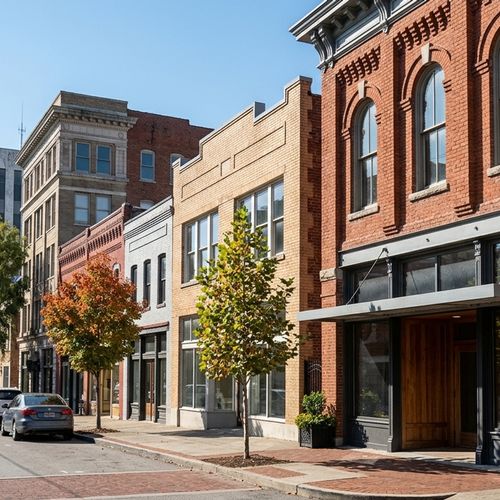
If you want to drive less here, you're mostly shopping condos. They cost more per square foot than houses, but they're also the city's most negotiable segment right now. Daily life across most of the metro runs on I-40, I-75, I-640, and the arterial roads feeding them. The walkable exceptions are a compact core: downtown, Market Square, the Old City, the University of Tennessee campus, and the Cumberland Avenue strip.
Living car-light mostly means buying a condo or an older home close to that core. Condos currently sit at 5.3 months of supply with a 96.6% median sale-to-list ratio, meaning there are more condos on the market than buyers are absorbing, and sellers are accepting a little under asking. You have room to ask for price reductions or favorable terms.
When you filter listings within walking distance of downtown, pay attention to what share are condos versus single-family houses. You can weigh the wider lifestyle factors of the area in our pros and cons of living in Knoxville guide.
How to Choose Where to Live Based on Your Commute
Will most of your weekday trips stay between downtown, the Old City, Market Square, and the UT campus? If yes, read about the public transportation options below and check out the Fort Sanders and Old North Knoxville profiles. If your work is out along I-40 west, go straight to the Farragut section and the driving and parking breakdown.
Would you give up square footage for a shorter or car-free commute? The budget section later in this guide works through what that trade costs in Knoxville right now.
Do you need a garage or a guaranteed off-street space? Check the parking notes under the Fort Sanders profile before you shortlist an older core neighborhood. And if anyone in your household relies on paratransit or door-to-door rides, the transit section covers local eligibility.
Public Transportation Options
Knoxville Area Transit (KAT) operates a bus network that radiates from the downtown transit center. It's useful for trips along the main corridors, but routes get thinner the farther you go from the core. Open KAT's current route map and schedule for the exact address you're considering, at the hours you'd ride, including Sundays.
The downtown trolley lines that visitors and residents used to ride have been replaced by Route 1, the fare-free Downtown Connector. It runs every 15 minutes and connects the stops throughout the city center.
For door-to-door rides, KAT's paratransit service, The LIFT, requires riders to be certified based on ADA standards. Knox County CAC Transit provides a separate demand-response service for county residents outside the city, city residents outside the KAT service area, or those too far from a bus stop.
Fixed routes don't cover much of west Knox County. While KAT reaches thousands of residents within the city limits, service out toward Farragut is extremely limited, leaving residents there to rely on CAC Transit or personal vehicles.
Neighborhoods and Commute Styles
Your daily transportation routine changes drastically depending on which side of the city you choose. Our best neighborhoods guide covers the wider list of areas, but three specific spots show the transition from walking everywhere to driving daily.
Fort Sanders
Fort Sanders sits right next to the UT campus and the Cumberland Avenue strip. Classes, groceries on the strip, campus events, and a short hop downtown are all walkable from here. It's the clearest example in the city of living without daily driving. UT students, faculty, and staff can ride KAT buses fare-free with their university ID. Buyers here typically shop for older converted homes or newer condo buildings.
The downside is parking. Off-street spaces are scarce, and streets fill up fast on game days and during the semester. Before you count on bringing a car to Fort Sanders, confirm whether the home has off-street parking and whether the street requires a city residential parking permit.
Old North Knoxville
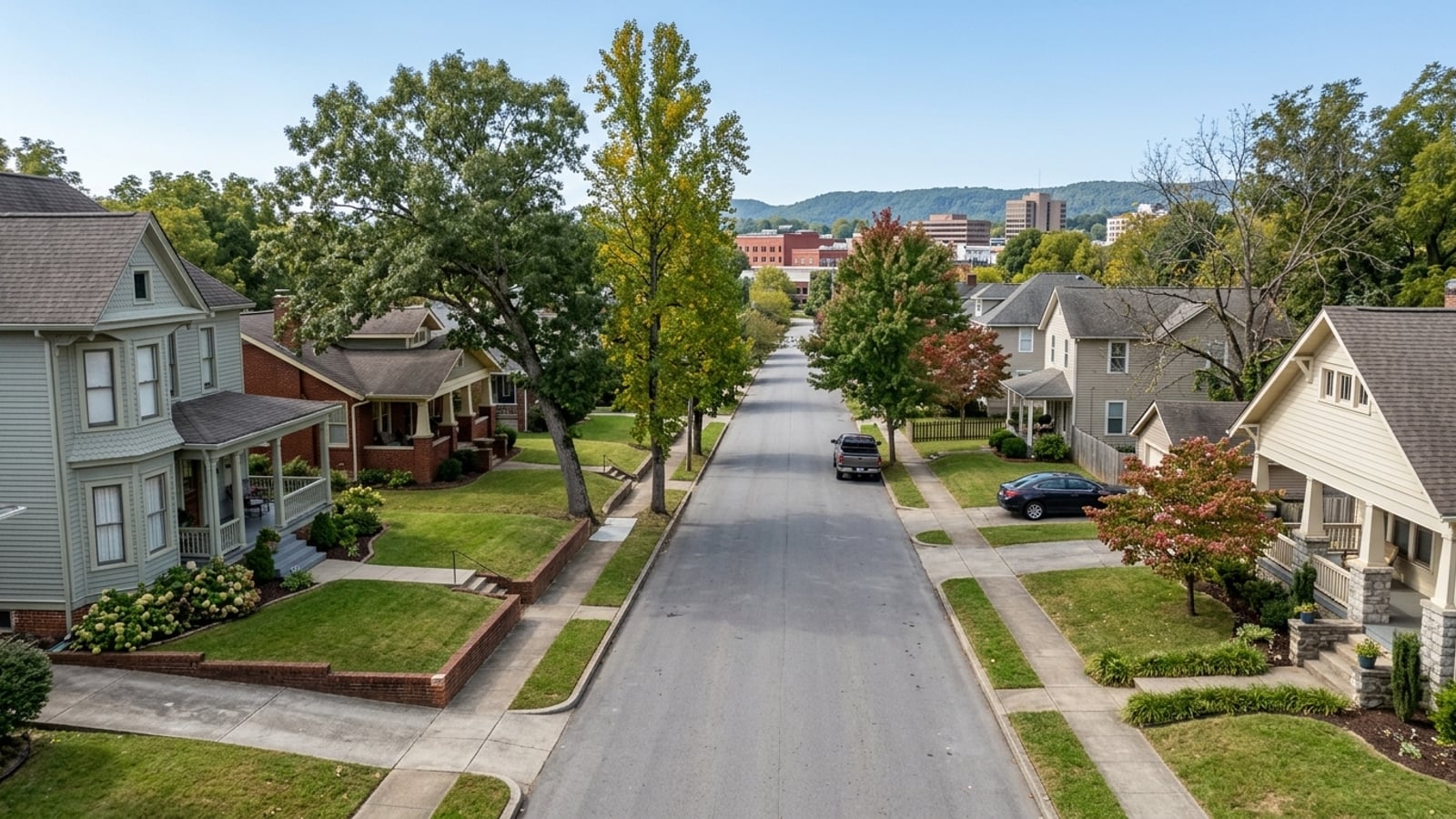
Located just north of downtown, this area centers around Happy Holler and the North Central Street corridor. Downtown is a short drive or bike ride away, so a household can often manage with one car rather than two. The housing stock is mostly historic single-family homes rather than condos, which matters if you want a car-light routine without sharing a building. Buyers weighing similar options often compare Old North to nearby Fourth and Gill.
Old North Knoxville is a locally designated historic district, so exterior changes go through a design review. Confirm with Knoxville-Knox County Planning what changes, like a driveway, garage, or carport, need that review before you assume you can add off-street parking.
Farragut
Farragut lies west along I-40 near the Turkey Creek shopping area and the Pellissippi Parkway. It's its own incorporated town with its own government, not a Knoxville neighborhood. The interstate provides a straight shot toward west Knox employers and the airport, making this the standard choice for buyers who want more house and plan to keep their vehicles.
What you give up is transit access. Fixed-route bus coverage out here is limited or absent, so plan on a car per working adult. Drive your likely commute at rush hour before you make an offer, especially on I-40.
Driving and Parking in the City
The local road network relies on a few major highways. I-40 runs east-west through the city, I-75 heads north, the I-640 bypass loops the northern edge, and the Pellissippi Parkway (I-140) serves the west side. Alcoa Highway runs south directly to the airport. These roads let a household outside the core reach most of the metro without much trouble, at the cost of interstate dependence.
If you commute into the city center, downtown parking mainly consists of city and private garages. Buying a downtown condo without an included space means a monthly garage cost you'll need to budget for. Ask the HOA whether parking is deeded, assigned, or an extra monthly cost, and what guest parking exists. While you're at it, ask for current dues and what they cover.
How Your Commute Affects Your Home Budget
Condos cost a median $269 per square foot citywide, while single-family homes sit at $223 per square foot. For illustration only, at those medians, a 1,100-square-foot property costs about $295,900 as a condo versus about $245,300 as a single-family home. That's a gap of roughly $50,600 to get into a walkable unit.
AAA reports the average cost to own and operate a new vehicle is $12,863 per year. If going car-light lets your household drop a second car, the premium for a walkable condo partly pays for itself over time.
Even with that slower market, condo prices still rose 9.7% year over year. Your room as a buyer is in the time on market and negotiating terms like repairs or closing-cost help, not necessarily expecting a massive price cut. You can check our housing market page for the latest trends and our buying guide for the full process. Pamella Haynes can pull recent condo and single-family sales near the commute you're planning to help you weigh the numbers.
At a Glance
- All homes: median sale price $324,845, up 3.1% year over year (90 days ending 2026-09-30, 686 sales)
- All homes: 3.9 months of supply, 877 homes for sale (90 days ending 2026-09-30)
- Single-family: median sale price $319,872, up 1.6% year over year (90 days ending 2026-09-30, 551 sales)
- Single-family: median $223 per square foot (90 days ending 2026-09-30)
- Single-family: median 53 days on market, 97.5% sale-to-list, 18.8% sold above list (90 days ending 2026-09-30)
- Single-family: 3.5 months of supply (90 days ending 2026-09-30)
- Condo: median sale price $339,965, up 9.7% year over year (90 days ending 2026-09-30, 110 sales)
- Condo: median $269 per square foot (90 days ending 2026-09-30)
- Condo: median 86 days on market, 96.6% sale-to-list, 10.2% sold above list (90 days ending 2026-09-30)
- Condo: 5.3 months of supply, 190 for sale (90 days ending 2026-09-30)
- Townhouse: median sale price $523,006, $319 per square foot, based on only 22 sales, so treat the 60.3% year-over-year jump as noise, not a trend (90 days ending 2026-09-30)
Getting Around Knoxville FAQs
How Much Does It Cost to Ride the Bus in Knoxville?
Route 1, the Downtown Connector, is fare-free and runs every 15 minutes. For regular fixed-route KAT buses, a One Ride pass is $1.50, a Day Pass is $4.00, a 7-Day Pass is $15, and a 30-Day Pass is $50, with reduced fares available for each. The LIFT paratransit service costs $2 per one-way ride, but confirm current fares on katbus.com before relying on them.
What Airport Is Closest to Knoxville, and How Do You Get Downtown from It?
McGhee Tyson Airport (TYS) in Alcoa is the closest, located just 12 miles south of downtown. The drive follows Alcoa Highway, and ground transportation options listed by the airport include rideshares, taxis, and rental cars.
How Bad Is Traffic in Knoxville?
The mean travel time to work for city residents is 20.4 minutes. Congestion often builds along the I-40/I-75 corridor in West Knoxville, where the state is studying a 17-mile stretch for priority investments and funding interchange improvements. Drive your own route at rush hour to test the actual delay.
Is It Safe to Walk Around Downtown Knoxville at Night?
To evaluate specific blocks, use the Knoxville Police Department's public crime data portal, which updates a Public Offense Dashboard every morning. You can look up reported incidents for the exact streets and hours you'd walk, and compare the same time windows across different areas. The dashboard reflects only reported incidents.
Do Knoxville Roads Get Snowy or Icy in Winter?
The city sees an average annual snowfall of 4.6 inches. The local snow and ice removal plan prioritizes main high-traffic roads and hospital routes first, connectors and hills second, and neighborhood streets last. Ask whether the street you're considering is on a priority route, since a hilly side street can stay slick longer.
Does Knoxville Have Greenways or Bike Trails for Getting Around?
The city maintains a network of greenways, but specific mileage and downtown connections frequently change. Check the city's official parks and recreation map to see if a paved trail connects your target neighborhood to downtown or the campus.
How Long Is the Drive from Farragut to Downtown Knoxville?
An official drive time from Farragut to downtown via I-40 is not published by the town government. Time the commute yourself at rush hour to see how long the interstate drive takes on a typical weekday.
How Far Is Knoxville from Nashville and Atlanta?
Knoxville is about 180 miles from Nashville via I-40 and roughly 200 to 215 miles from Atlanta via I-75. The drive to Chattanooga is about 110 to 112 miles down I-75. You can see more about the region's layout on our where is Knoxville page.
Sources
- Redfin: Data Center
- Knoxville Area Transit: Route 1
- City of Knoxville: Schedules & Maps
- Knoxville Area Transit: UT Partnership
- McGhee Tyson Airport: About
- U.S. Census Bureau: QuickFacts Knoxville city, Tennessee
- Knoxville Regional TPO: Draft FY2026-27 TPWP
- City of Knoxville: City Prepared for Winter Weather
- Town of Farragut: History
- AAA: New Vehicle Ownership Costs Hit $12,863 Annually
- Knoxville Police Department: Public Dashboards
- Travelmath: Drive distance from Knoxville, TN to Nashville, TN
Check out this article next