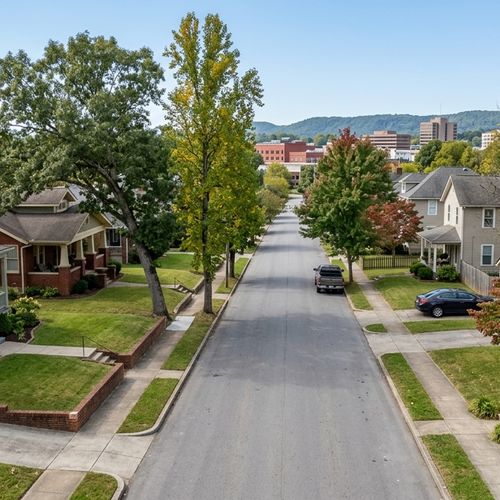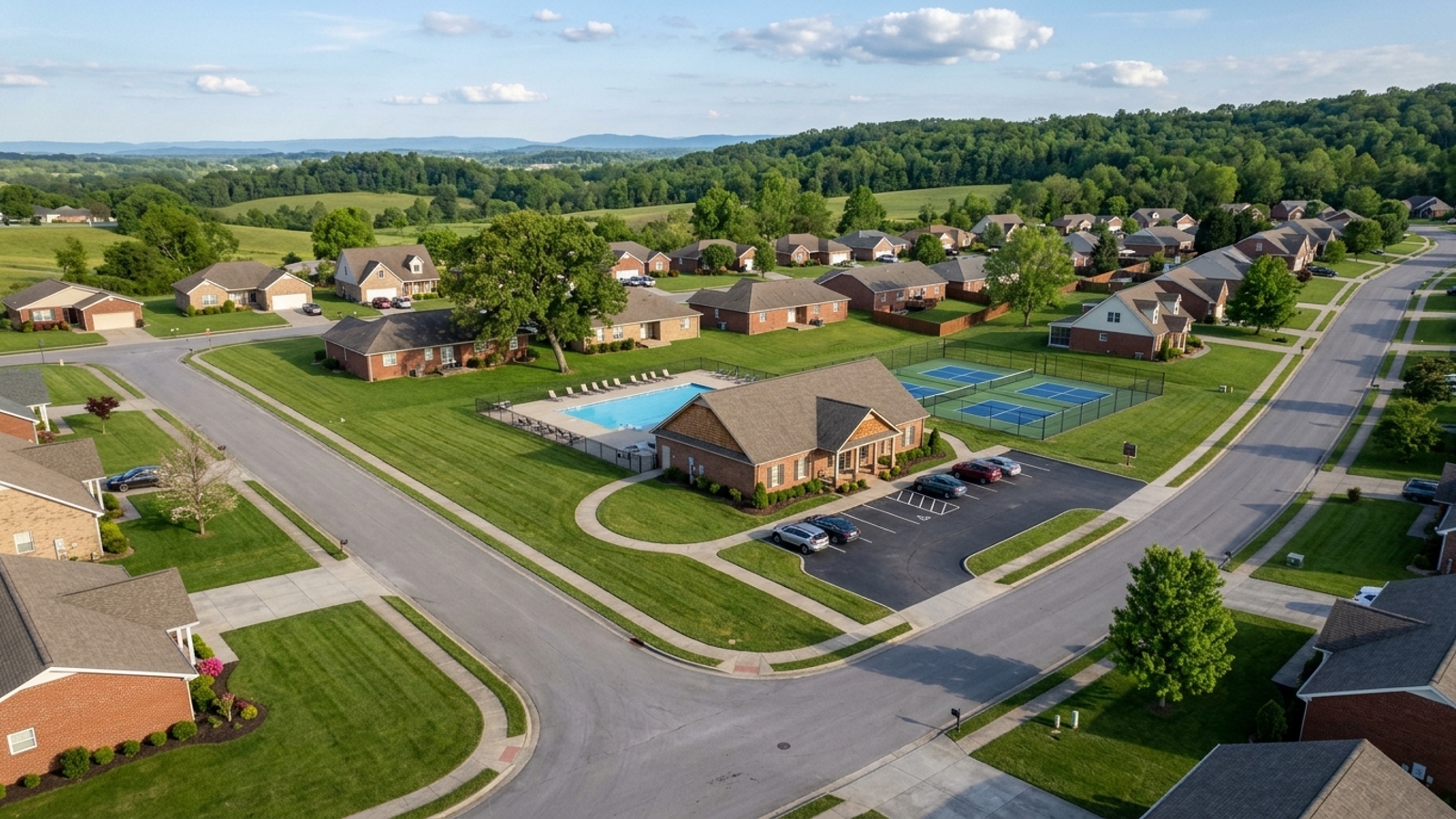
If your retirement plan means selling a Knoxville house to buy something lower-maintenance, the numbers favor you on both ends of the transaction. Single-family homes move quickly, spending a median 53 days on the market with 18.8% selling above list price. Condos sit for a median 86 days, carry 5.3 months of supply, and close at a sale-to-list ratio that leaves real negotiating room on the purchase side.
The cost of low maintenance shows up in square footage, not the sticker price. Condos run around $269 per square foot against $223 for houses, based on Redfin data for the 90 days ending September 30, 2026. You'll likely trade space to avoid yard work, but you gain a more relaxed buying timeline.
Key Takeaway
If you want to own a low-maintenance home in retirement, Knoxville's condo market gives you the most room to negotiate. Condos took a median 86 days to sell in the 90 days ending September 30, 2026, lingering roughly a month longer than single-family houses. You get less space for the money, so if you need daily care services more than you need property equity, price out a fee-based senior living community instead.
Who This Guide Is For
You're planning a retirement move in or around Knoxville and deciding whether to buy a smaller home, stay in a house, or pay monthly for a senior living community.
What Are Your Retirement Housing Options in Knoxville?
A $300,000 budget buys roughly 1,115 square feet of condo space versus about 1,345 square feet of single-family house. Trading exterior maintenance for an association fee costs you about 230 square feet of living space at that price point. The decision usually comes down to three distinct paths: buying a condo or age-restricted home, staying in a single-family house, or renting an apartment in a senior living community.
The housing market treats these property types differently. Because condos linger roughly a month longer than houses, buyers looking to downsize have more breathing room to view properties and negotiate terms. Sellers, on the other hand, benefit from the tighter inventory on the single-family side. You can review Knoxville housing market trends to see how these dynamics shift throughout the year.
Your choice comes down to whether you want to own an asset, limit your maintenance responsibilities, or access on-site care. Each path carries distinct financial trade-offs around upfront costs, monthly fees, and future resale value.
Types of Retirement Communities in Knoxville
The CAC Office on Aging maintains a directory of affordable senior rental housing in Knox County for adults who meet specific income limits. Properties like Blueberry Ridge Senior Community, Cagle Terrace, Guy B. Love Towers, Isabella Towers, Summit Towers, and Willow Place Senior Community base their eligibility and rent caps on annual gross income. These income-restricted apartments offer a straightforward rental model for older adults managing a fixed budget.
If you'd rather own, you can look for age-restricted condos or subdivisions governed by a homeowners association. These 55+ communities require residents to meet federal age guidelines, and you purchase the property just like any other real estate transaction. You build equity over time, but you also pay monthly HOA dues to cover shared maintenance and community amenities.
Fee-based communities run on a completely different model. Instead of buying real estate, you pay a monthly fee, and sometimes a large entrance fee, for housing, meals, and care services. Always ask for entrance fee refund terms in writing and have an elder-law attorney review the contract before you sign anything.
"Retirement community" is a marketing label, not a specific license type. If you expect a facility to provide medical or personal care, verify its status as a licensed Assisted Care Living Facility through the Tennessee Department of Health's online lookup tool.
Buying a Condo or 55+ Home in Knoxville
Knoxville condos recently showed 5.3 months of supply, so you're rarely competing with a crowd. That slower pace gives you room to negotiate. With a median sale-to-list ratio of 96.6%, buyers are regularly negotiating discounts. On a $350,000 asking price, the median outcome is about $338,100, or roughly $11,900 under asking.
That said, you should still review pricing history carefully before making an offer. The condo median sale price was $339,965, up 9.7% year over year on 110 sales, even as sales slowed. Ask the seller's agent for a unit's list-price history and any previous reductions so you understand how the seller is positioned.
Townhouses offer a middle ground between condos and detached houses, but the local data requires context. The recent median sale price for Knoxville townhouses was $523,006, based on only 22 sales. With a sample that small, treat that number as a reflection of which specific units sold recently rather than a reliable market-wide trend.
The slower condo market that works in your favor today will eventually work against you at resale. Age restrictions narrow your future buyer pool, which can make it harder to sell quickly when the time comes. You'll also face unknown carrying costs until you ask the HOA for current monthly dues, what they cover, the latest reserve study, and any planned special assessments. If you or a future buyer might use FHA financing, look up the condo on HUD's FHA-approved list before you commit.
Buying a Single-Family Home to Age in Place
Nearly 19% of single-family homes in Knoxville recently sold above list price, and the market holds just 3.5 months of supply. If you're selling a larger house to fund your move, you're selling in the faster lane. You can explore selling a home in Knoxville for strategies on timing that transaction.
If you're buying a house to stay in, expect less negotiating room than you'd find with a condo. You get more space for your dollar, but you compete with a broader pool of buyers. You can review buying a home in Knoxville to prepare your financing, and compare prices across the best neighborhoods in Knoxville, specific Knoxville zip codes and prices, or areas like Bearden, Farragut, and Fountain City.
Property taxes are a recurring cost, but local programs can help. For 2026, the Knox County Trustee's Office offers a state-funded Property Tax Relief Program providing a payment credit up to $85 for qualifying elderly homeowners aged 65 and older. The county also offers a Senior Property Tax Freeze Program that locks a qualifying homeowner's property tax bill at the amount owed in the year they first qualify. Contact the Knox County Trustee to confirm your eligibility and application deadlines.
The trade-off for owning a single-family home is that all maintenance falls on your shoulders: the yard, the roof, the exterior. Because mobility needs change, check for a single-level layout, step-free entry, and accessible bathrooms on any house you plan to stay in long term. Get contractor quotes for any necessary modifications before you commit to the purchase.
Renting in a Senior Living Community in Knoxville
Renting in a senior living community trades property equity for bundled daily services. Your monthly fee typically covers meals, housekeeping, organized activities, and transportation, along with care tiers if you choose an assisted living facility. Continuing care communities often use entrance-fee models, requiring a large upfront payment alongside the monthly rent.
Because you don't own the real estate, your costs will shift based on the facility's policies and your personal health. Ask any community for its annual fee-increase history and the exact price of each higher care level in writing. You need to know what health changes trigger a move to a more expensive care tier before you sign anything.
The primary downside is straightforward: you build no equity, and monthly fees rise over time. If you pay a large upfront sum to a continuing care community, get the entrance-fee refund terms in writing. Have an elder-law attorney or financial adviser review any continuing care contract so you understand exactly what happens to your money if you move out or pass away.
How to Choose the Right Option for You
Knoxville's median condo price of roughly $340,000 sits slightly higher than the single-family median of $320,000, so the decision depends on lifestyle and care needs more than it does on sticker price. The best fit comes down to your equity goals, your budget, and how much maintenance you want to handle.
To narrow things down, ask yourself these four questions:
- Do you need help with daily care now, or expect to within a few years? If yes, start with renting in a senior living community and the FAQ on affording care. If not, keep reading the buying sections.
- Do you want to keep building equity and have something to sell later? Then compare buying a condo or 55+ home with buying a single-family home to age in place.
- Is lower upkeep worth roughly 230 fewer square feet for the same $300,000? If yes, the condo section is your shortlist. If not, the single-family section is.
- Does your income cap what you can spend on rent? Go to the income-restricted senior apartments described in the community types section and the FAQ on the cheapest way to live.
If you want a low-maintenance home you own with room to negotiate on price, start with Knoxville condos, including 55+ condo communities. If you want the most living space for your budget, single-family homes with single-level floor plans are the better fit. If you want rent capped to your income, check the CAC Office on Aging affordable senior rental list.
If you want meals, services, or care included with no home to maintain or resell, look at licensed independent or assisted living communities and price them against owning. If your plan involves selling a larger house to fund the move, listing before or alongside your purchase puts you in a strong position. Review the pros and cons of living in Knoxville for a broader look at retiring in the area, and reach out to Pamella Haynes to compare current condo listings against a home sale timeline.
At a Glance
- All homes: median sale price $324,845, up 3.1% year over year, on 686 sales (90 days ending 2026-09-30)
- All homes: median 56 days on market, 3.9 months of supply, 877 homes for sale, $230 per sq ft (90 days ending 2026-09-30)
- Single-family homes: median sale price $319,872, up 1.6% year over year, on 551 sales, $223 per sq ft (90 days ending 2026-09-30)
- Single-family homes: median 53 days on market, 97.5% sale-to-list, 18.8% sold above list, 3.5 months of supply, 629 for sale (90 days ending 2026-09-30)
- Condos: median sale price $339,965, up 9.7% year over year, on 110 sales, $269 per sq ft (90 days ending 2026-09-30)
- Condos: median 86 days on market, 96.6% sale-to-list, 10.2% sold above list, 5.3 months of supply, 190 for sale (90 days ending 2026-09-30)
- Townhouses: median sale price $523,006 and $319 per sq ft, based on only 22 sales, so treat it with caution. The 60.3% year-over-year change likely reflects which homes sold, not a market-wide jump (90 days ending 2026-09-30)
- Townhouses: median 52 days on market, 98.3% sale-to-list, 4.8% sold above list, 4.5 months of supply, 32 for sale; small sample of 22 sales (90 days ending 2026-09-30)
Knoxville Retirement Communities FAQs
What Is the 80/20 Rule in a Retirement Community?
Under the federal Housing for Older Persons Act, a community can market itself as 55+ if at least 80% of occupied units have at least one resident aged 55 or older. The community must also publish policies demonstrating its intent to operate as 55-or-older housing and comply with HUD's age-verification rules. Ask the property management for their written age-verification policy to confirm compliance.
Is It Cheaper to Live in a 55+ Community in Knoxville?
Not necessarily on purchase price alone. That condo median runs slightly above the all-homes median of $324,845 for the 90 days ending September 30, 2026. Savings typically come from HOA-covered exterior upkeep versus paying out of pocket for your own roof and yard maintenance. Get the HOA dues and compare them with your current yearly maintenance costs to see where you land.
What Is the Downside of Living in a Retirement Community?
Monthly fees rise over time, and continuing care entrance fees may be partly or fully non-refundable depending on your specific contract. Age-restricted condos also carry a smaller resale buyer pool, which can make them harder to sell later. Ask for the community's fee-increase history in writing so you can anticipate your future costs.
How Much Is Rent in a Retirement Community in Knoxville?
Rent varies widely based on the level of care and amenities provided, and no official median exists for independent living. Request current pricing sheets for each community and care level to understand your exact costs. For assisted care, ask for the exact price of each care tier in writing so you know what you'll pay as your needs change.
What Is the Cheapest Way for a Senior to Live in Knoxville?
Income-restricted senior apartments are usually the lowest-cost option. The CAC Office on Aging's Aging Well Resource Directory maintains a list of affordable Knox County apartment communities designated for elderly residents, with eligibility and rent based on annual gross income. Ask each property, such as Summit Towers or Cagle Terrace, about their current waitlist length.
Is Knoxville a Good Place to Retire?
Yes, especially for retirees looking to minimize state taxes. Tennessee has no state income tax on wages, and the Hall Income Tax on interest and dividends was fully repealed effective January 1, 2021. You can read the pros and cons of living in Knoxville to compare local weather, healthcare access, and housing costs.
Are There 55+ Communities Near Knoxville, TN?
Yes, Knox County and the surrounding areas feature several age-restricted neighborhoods, but you must verify their legal status. "Active adult" marketing does not always mean a community is legally age-restricted under federal rules. Confirm the community's HOPA status and age policy in writing before you buy.
Sources
- Redfin: Data Center
- eCFR: 24 CFR 100.305
- Medicare.gov: Long-Term Care
- TN.gov: TennCare CHOICES
- KnoxSeniors.org: Housing Affordable - Rent Housing
- Wikipedia: Hall income tax
- Knox County Trustee: Tax Relief
- Tennessee Department of Health: Licensure Verification
- ETHRA: State Health Insurance Assistance Program
Check out this article next